 Throughout Smoke Signals the relationship and history between Native nations and the United States is seen through a Native perspective. At the beginning of the movie an American flag is displayed upside down representing conflict. However, towards the end of the movie the American flag is not shown representing that things have gotten better. The movie also uses red, white and blue as symbols in what characters are wearing or what they are around. Also when Arlene is splitting fry bread and there is an American flag behind her it shows that America could have been. The Fourth of July in Smoke Signals is also portrayed as a day when bad things happen. It is ironic that they even celebrate it in the first place. Smoke Signals made an accurate statement on the previous and current treatment ofNatives in the United States.
Monday, March 17, 2014
Smoke Signals
The portrayal of Natives in media and literature has evolved from the Westerns with John Wayne, to modern movies like Dances With Wolves, Reel Injun, The Fast Runner, and Smoke Signals. The media has played a large role in creating the Native identity including the stereotypes surrounding Natives. Smoke Signals did a good job in recognizing those false stereotypes and then breaking them down through humor and drama. The first stereotype that we see is the idea of a "drunk indian" and escapism. When Victor says that he has not had a drop of alcohol in his life and the sheriff responds "Then what kind of Indian are you?" (Eyre). Natives also have a stereotype of being a warrior, this was created by media and has since shaped native culture. The Cour d'Alene, the tribe that Victor and Thomas are a part of are peaceful yet Victor says "Quit grinning like an idiot. Indians aint supposed to smile like that! Get stoic, like this. You gotta look mean or people won't respect you"(Eyre).
Throughout Smoke Signals the relationship and history between Native nations and the United States is seen through a Native perspective. At the beginning of the movie an American flag is displayed upside down representing conflict. However, towards the end of the movie the American flag is not shown representing that things have gotten better. The movie also uses red, white and blue as symbols in what characters are wearing or what they are around. Also when Arlene is splitting fry bread and there is an American flag behind her it shows that America could have been. The Fourth of July in Smoke Signals is also portrayed as a day when bad things happen. It is ironic that they even celebrate it in the first place. Smoke Signals made an accurate statement on the previous and current treatment ofNatives in the United States.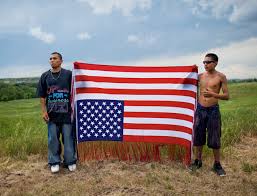
Throughout Smoke Signals the relationship and history between Native nations and the United States is seen through a Native perspective. At the beginning of the movie an American flag is displayed upside down representing conflict. However, towards the end of the movie the American flag is not shown representing that things have gotten better. The movie also uses red, white and blue as symbols in what characters are wearing or what they are around. Also when Arlene is splitting fry bread and there is an American flag behind her it shows that America could have been. The Fourth of July in Smoke Signals is also portrayed as a day when bad things happen. It is ironic that they even celebrate it in the first place. Smoke Signals made an accurate statement on the previous and current treatment ofNatives in the United States.
Completion of a Ceremony
 Ceremony by Leslie Marmon Silko is written with great symbolism and themes that uncover social stigmas about native race and culture as well as alcoholism and post traumatic stress. At the finish of the book Tayo completes his own ceremony by healing from his PTS and learning the truth about the world he lives in. Throughout the end of the book Tayo is tempted with things that would let the destroyers win. For example he is tempted to go out and drink with his "friends" but he does not because he knows about the ceremony. His friends choose the road of escapism through alcohol and eventually that causes them to turn against them. "He knew then that they were not his friends but had turned against him....He was not sure why he was crying, for the betrayal or because they were lost"(Silko 225). In this way the book shows what Tayo could have been if he chose not to heal. Once Emo and his gang gather at the bomb site the true evil and witchery is revealed. The setting is in the old atomic bomb site which is a symbol for the power and destruction that humans are capable. Silko says that "They left behind only the barbed-wire fences, the watchman's shack, and the hole in the earth" (Silko 226). Tayo recognizes that whites are not to blame for the destruction but witchery and anyone can give into witchery, case in point his friends.One of the most telling lessons that Tayo is forced to learn is peace when violence sounds like a good option. Tayo has the option to save one of his friends from Emo but chooses not too because that would be destruction and violence. This is an act of healing that finally completes Tayos story.
Although I thought the ending of the book was powerful it was confusing. The poem on page 237 that starts with "Hummingbird and Fly...." (Silko 237) makes no sense to me and I think it is a tool to help wrap up the book. Additionally Silko does not wrap up what happens with Ts'eh and Tayo. Is this a part of post-modernism? Also throughout the book Tayo speaks a lot to how whites treat Natives and Silko does not really make a statement about this. The closest thing to this is Silko's message of healing and resisting witchery.
Subscribe to:
Comments (Atom)