Natives in this country have been painted with the same stripe and are often prejudiced to this day. Tayo a "half-breed" Laguna Pueblo struggles to identify himself as either Native or American, and it is a shame that he was forced to make that categorization. So far in Ceremony, Silko has revealed flaws in societal views on Natives in warfare, class and behavior. In tearing down these stereotypes Silko has revealed yet again that people are people no matter what skin color and challenges Americans of all ethnic groups to see past the social barrier that has been built up for many years.
Monday, January 27, 2014
Equality
As we begin to read Ceremony by Leslie Silko, questions come up about themes of the book which include alcoholism, PTS, the passage of time, and healing via storytelling. This book has all of these things tangled together in a web that is interesting and fun to untangle. Ceremony is based off of the Laguna Pueblo tribe. Illustrations about the culture, attitude and history of the tribe enrich the book, however Silko also creates an image of how natives were viewed by society during the time period. By analyzing the book important lessons on equality and equity are revealed.
Natives in this country have been painted with the same stripe and are often prejudiced to this day. Tayo a "half-breed" Laguna Pueblo struggles to identify himself as either Native or American, and it is a shame that he was forced to make that categorization. So far in Ceremony, Silko has revealed flaws in societal views on Natives in warfare, class and behavior. In tearing down these stereotypes Silko has revealed yet again that people are people no matter what skin color and challenges Americans of all ethnic groups to see past the social barrier that has been built up for many years.

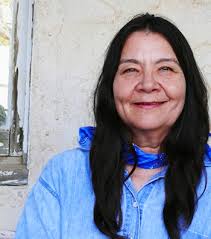
Natives in this country have been painted with the same stripe and are often prejudiced to this day. Tayo a "half-breed" Laguna Pueblo struggles to identify himself as either Native or American, and it is a shame that he was forced to make that categorization. So far in Ceremony, Silko has revealed flaws in societal views on Natives in warfare, class and behavior. In tearing down these stereotypes Silko has revealed yet again that people are people no matter what skin color and challenges Americans of all ethnic groups to see past the social barrier that has been built up for many years.

Monday, January 20, 2014
Native Study
Ute

The Utes are far ranging people that live in Colorado, Utah, New Mexico and Nevada. Evidence suggests that this tribe is native to the area. Ute's traveled in small bands and were a hunter- gatherertribe. In the 1630's the Ute tribe was introduced to horses as well as other European goods through Spanish settlers. The introduction of horses changed the way the Utes live. The Ute reservation in Northeastern Utah, Fort Duchesne, is one of the largest and has 3,157 inhabitants. Fort Duchesne has a tribal government and has several governments.
 Famous Utes:
R. Carlos Nakai: Native American flutist

Raoul Trujillo: Dancer, choreographer, and actor

Chief Ouray: Leader of the Uncompahgre band of the Ute Tribe

The Cherokee tribe is the largest tribe in the United States. 22,000 people speak the Cherokee language today. Historically, the Cherokee lived in North Carolina, South Carolina, Georgia, Alabama and Tenessee. In 1835, the Cherokee signed a deal with the US government traded their land for Oklahoma and $5 million. This was known as the Trail of Tears. There are three federally recognized Cherokee tribes: the Cherokee Nation, the united Keetoowah Band and the Eastern Band of Cherokee Indians. Each tribe has its own government, laws, police, and services. Each band is led by one war chief and one peace chief.


Famous Cherokees
Sequoyah: Credited with inventing the Cherokee writing system.

Dennis Weaver: Known for his Emmy-winning role on Gunsmoke

Jimi Hendrix: Rock legend, was of Cherokee heritage through his maternal grandmother.

Monday, January 13, 2014
Dances With Wolves (1990)
Usually when I think about watching a movie, I think about lounging around and eating popcorn. This was not the case with Dances with Wolves. The movie changed my views on not only Natives but film as well. During preparation to watch the film we discussed how Dances with Wolves was the first popular movie to adequately represented the Sioux and Pawnee tribes. Of course, as with most historical films, some aspects of native culture were twisted and stretched. The movie was not only a form of entertainment but a message about societal views on Natives and the West. Issues were deeper and more complicated in the West than perceived and Americans had prejudices about the cultures of the frontier.
This starkly contrasts with what my judgments of the film originally were. In my mind Dances with Wolves was going to be a mix of the old western movies my grandpa likes and a war movie. It turns out to be the exact opposite. The Sioux are portrayed as compassionate, loyal and civilized group of people who are just trying to protect themselves and understand. The Sioux tribe and John Dunbar have to overcome fear, a communication barrier, and basic cultural differences to understand each other. It is heartwarming to say the least.
At this point I have not yet finished the film but I am excited to see how the story will proceed. As I watch, I would like to take note of parallels within the film and character progression as well as other important analysis. Analysis of film has been hard for me but when I see a parallel or image it brings a whole new meaning to the film. Dances with Wolves contains many important and relevant lessons on humanity and society as a whole.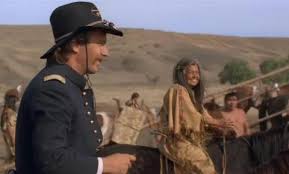
This starkly contrasts with what my judgments of the film originally were. In my mind Dances with Wolves was going to be a mix of the old western movies my grandpa likes and a war movie. It turns out to be the exact opposite. The Sioux are portrayed as compassionate, loyal and civilized group of people who are just trying to protect themselves and understand. The Sioux tribe and John Dunbar have to overcome fear, a communication barrier, and basic cultural differences to understand each other. It is heartwarming to say the least.
At this point I have not yet finished the film but I am excited to see how the story will proceed. As I watch, I would like to take note of parallels within the film and character progression as well as other important analysis. Analysis of film has been hard for me but when I see a parallel or image it brings a whole new meaning to the film. Dances with Wolves contains many important and relevant lessons on humanity and society as a whole.
Subscribe to:
Comments (Atom)